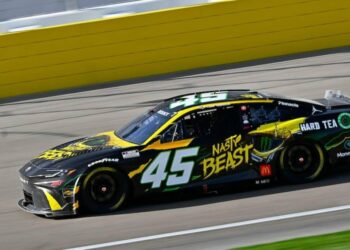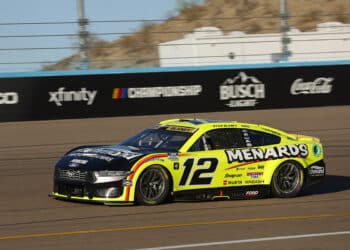

FlurrySports has three takeaways from the NASCAR race yesterday — Straight Talk Wireless 500 at Phoenix Raceway.
Several NASCAR Cup Series drivers and race teams echoed the mantra of “the season starts here” ahead of Sunday’s action at Phoenix Raceway.
After all, the first three races of the 2026 season featured two drafting tracks and a road course. The Straight Talk Wireless 500 offered the first real look at where teams stood on a more traditional oval.
Sunday’s race delivered plenty of action throughout the field.
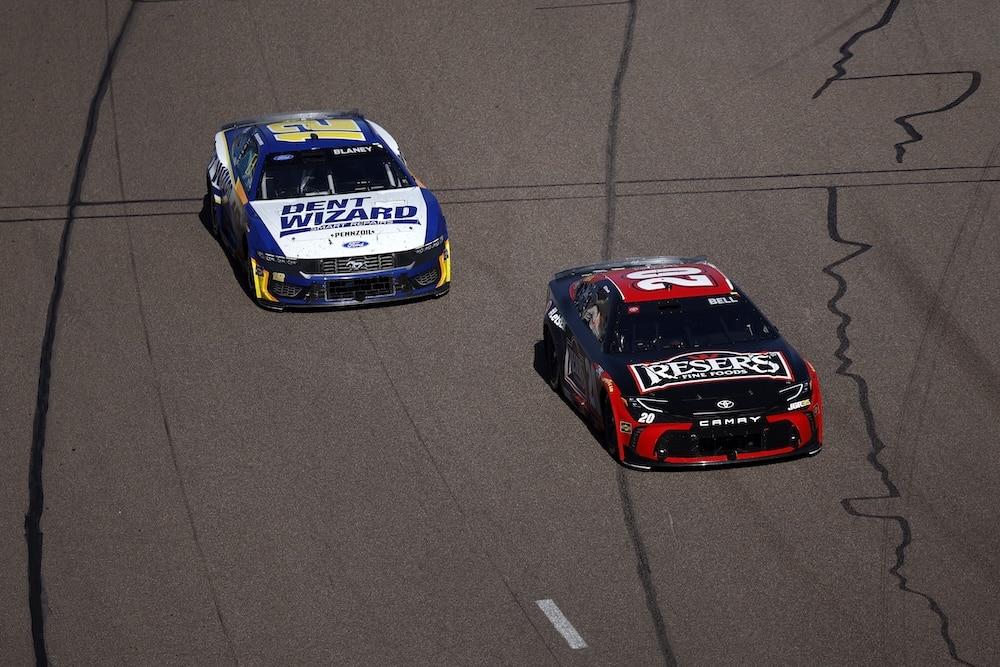
Flat tires and frequent cautions repeatedly shuffled the running order, but when it mattered most, the fastest cars still rose to the top. Ryan Blaney ultimately claimed the victory with Christopher Bell finishing a close second.
Let’s dive into three key takeaways from the Straight Talk Wireless 500.
Takeaways From Straight Talk Wireless 500: Who Won the NASCAR Race Yesterday?
Two Tires Beat Four Late at Phoenix… Again
History has a way of repeating itself, and we saw a bit of that late in the Straight Talk Wireless 500.
When the caution flew with roughly 25 laps remaining, it was clear that pit strategy would decide the race. Ryan Blaney opted for two tires while race leader Christopher Bell brought the No. 20 Toyota to pit road for four fresh Goodyears.
Blaney chose track position. Bell chose speed.
The thinking behind each decision likely reflected how the day had unfolded. Blaney had already been forced to drive through the field twice after pit road issues, making track position especially valuable. Bell and the No. 20 team, meanwhile, had been nearly flawless all afternoon.
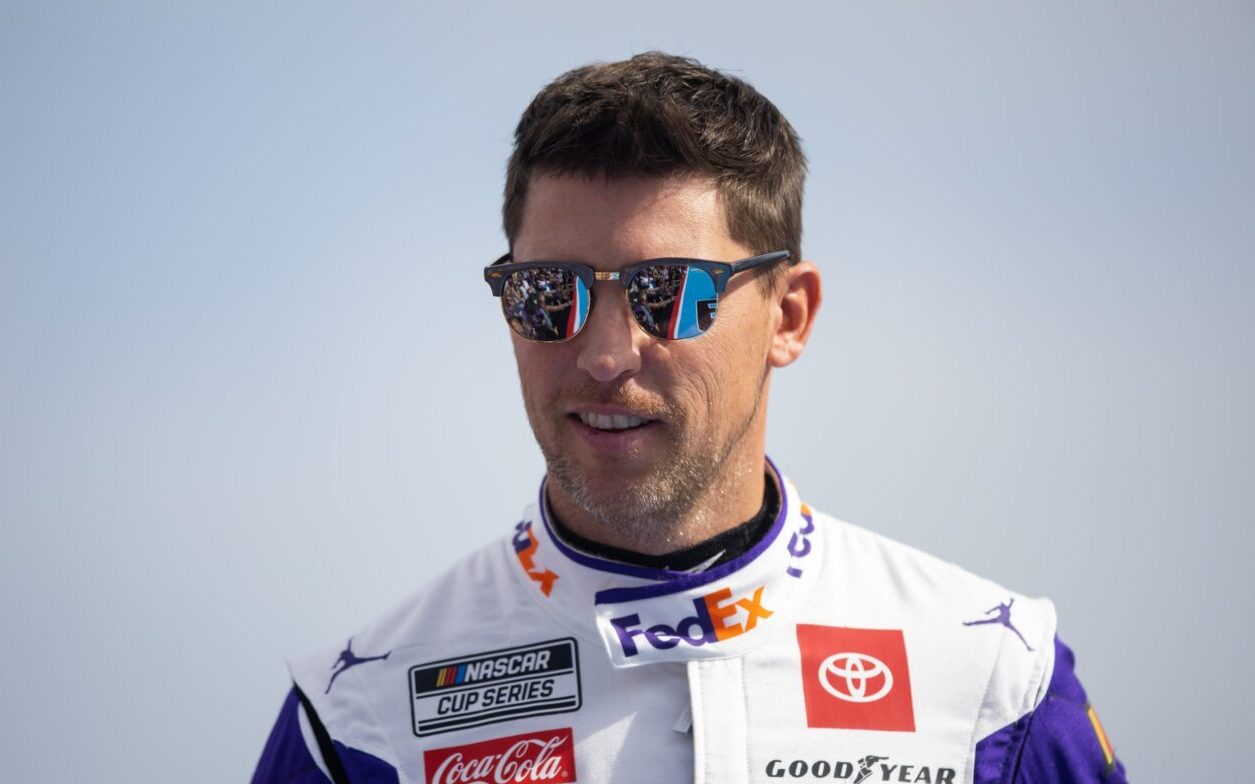
Much like Denny Hamlin’s championship hopes last fall, Bell’s pursuit of the win Sunday may have been decided the moment four tires hit the car.
There were two important differences this time, however.
The championship race restart came with fewer than ten laps remaining. Sunday’s restart came with 20 laps left on the board. A second caution shortly after pit stops were completed also reduced the tire advantage Bell hoped to capitalize on.
Even so, Bell finished just half a second behind Blaney at the checkered flag.
The takeaway may be that the tipping point between choosing two tires and four late at Phoenix sits somewhere between 10 and 20 laps remaining. Adam Stevens may have chosen incorrectly for the No. 20 car based on the result, but his call was also impacted by the subsequent caution that no one could have predicted.
New Chevrolet Body Shows Early Growing Pains
Sunday’s race was a far cry from qualifying for the Chevrolet teams. Despite placing five cars inside the top ten in qualifying, the Bowtie brigade appeared to be a step behind once the green flag waved.
Even Hendrick Motorsports was not immune.
Kyle Larson started on the front row but quickly faded outside the top 10 during the opening stage, an early sign that Chevrolet teams might be lacking pace compared to Ford and Toyota.
To their credit, a handful of Chevrolet drivers were able to recover respectable finishes as the race progressed.
Larson rallied back to finish third.
William Byron crossed the line seventh despite being involved in a minor on-track incident earlier in the race.
Michael McDowell also delivered a quiet top-10 finish for Spire Motorsports.
Beyond those three, however, the results fell off quickly.
Shane van Gisbergen’s 11th-place finish was the only other Chevrolet inside the top 15.
The struggles were evident at the front of the field throughout the race.
Chevrolet teams led just one lap all afternoon!
That lack of pace may not be entirely surprising. Chevrolet introduced a new body for its Gen-7 cars this season, and Phoenix may have exposed some early growing pains.
Drivers like Larson and Byron were able to salvage solid results thanks to their skill and the strength of Hendrick Motorsports. But for much of the field, the speed simply wasn’t there.
Even Chase Elliott spent most of the afternoon outside the spotlight before finishing 23rd.
Teams Push Tire Limits at Phoenix
Another storyline that developed during the middle portion of Sunday’s race and continued thereafter involved tire management.
Phoenix has always been a track where teams search aggressively for grip, and that often means experimenting with air pressures to maximize speed on the flat one-mile oval.
By the midpoint of the race, those gambles began to show consequences.
Several drivers experienced tire issues as run lengths increased, a sign that some teams may have pushed their setups close to or even beyond the limit.
Chase Briscoe was putting together a strong run before a blown right front sent him hard into the wall.
All three Richard Childress Racing cars also suffered tire failures during the race. Austin Dillon, who had been the class of the RCR camp throughout the afternoon, saw a potential top-10 finish disappear after a late blown tire.
The result of so many failures was a parade of cautions.
Counting the stage breaks, there were 12 total cautions in the 2026 Straight Talk Wireless 500, tying a Phoenix Raceway record for a single race.
Strategic gambles with older, worn tires on the restarts produced by those cautions also proved costly. RFK Racing attempted to stretch the life of worn rubber during one pit sequence, only to see its cars swallowed up by the field almost immediately.
Later in the race, drivers such as Josh Berry and Chase Elliott faced similar problems when trying to stay out on older tires. Elliott went from restarting on the front row to outside the top 30 in the blink of an eye.
Phoenix has long rewarded teams that manage their tires carefully, but Sunday’s race suggested some teams may have been flirting with the edge a little too aggressively.