
Recent NBA Draft Lottery rule changes were proposed in order to help with the tanking crisis across the league.
Add us as a preferred source on Google searches!
The NBA Draft Lottery was put in place as a way to stop teams from tanking. Its creation meant the team with the worst record was no longer guaranteed the first overall draft pick, deterring teams from purposefully losing games down the stretch. However, recent seasons have proven that the current NBA Draft Lottery rules are not enough to prevent tanking.
With major reforms on the horizon for the 2027 NBA Draft, the league aims to reshape incentives and discourage intentional losing. Recently, new NBA Draft Lottery rules have been proposed. Will this stop tanking once and for all?
The Evolution of the NBA Draft Lottery
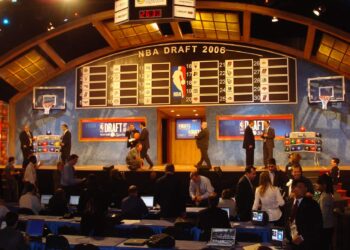
The modern lottery system debuted in 1985 following blatant tanking for stars like Hakeem Olajuwon and Michael Jordan. It replaced the system where the worst record received the top overall pick and instead used ping-pong balls to add randomness. Over the years, tweaks addressed imbalances, but the core issue remained: the worst teams had the strongest incentive to lose more.
The 2019 overhaul flattened odds significantly. The three worst teams each received a 14% chance at the No. 1 pick (down from 25% for the absolute worst). The lottery expanded to the top four picks, ensuring the worst team could fall no lower than fifth. These changes helped initially, but new problems emerged as teams targeted specific lottery tiers rather than outright bottoming out.
Why Reform Is Urgent: 2025-26 Tanking Crisis
The 2025-26 season highlighted the system’s flaws. A loaded 2026 draft class amplified incentives to tank, leading Commissioner Adam Silver to declare tanking “worse this year than we’ve seen in recent memory.”
The league issued fines for questionable player resting, but structural change became essential. General managers and owners pushed for bolder action, culminating in proposals presented to the Board of Governors. A special vote on the proposed NBA Draft Lottery rule changes highlighted below is scheduled for May 28th, with changes likely targeting the 2027 draft.
Key Proposed NBA Draft Lottery Rule Changes
The leading proposal, known as the “3-2-1 Lottery,” represents a significant evolution:
- Expansion to 16 teams: The lottery would grow from 14 to 16 teams, incorporating more Play-In participants.
- Flattened and tiered odds: Teams finishing 4th through 10th-worst (avoiding the bottom three but missing Play-In/playoffs) receive three lottery balls each (roughly 8.1% chance at No. 1). Bottom-three teams get only two balls but gain a floor at the 12th pick. Play-In teams receive tiered balls: 9th/10th seeds get two, while 7-8 game losers get one.
- Lottery for all picks: Drawings could determine more (or all) of the first-round order, reducing reliance on reverse standings.
- Anti-consecutive penalties: No team could win the top pick in consecutive years or secure three straight top-five selections.
- Additional safeguards: Lottery odds might freeze at the trade deadline, pick protections could tighten (e.g., top-four or top-14+ only), and multi-year records could factor in. A sunset clause might apply after 2029, with enhanced disciplinary powers for blatant tanking.
The 3-2-1 framework appears to have the strongest momentum among the proposed NBA Draft Lottery rule changes.
What This Means for NBA Fans and Teams
Proponents argue the changes eliminate the reward for finishing dead last. Teams gain an incentive to fight for mid-lottery positioning and Play-In spots rather than surrendering late-season games. This could produce more meaningful regular-season basketball and reduce star-resting controversies. Critics worry it might hurt the NBA’s poorest teams, which are most in need of high-upside talent, especially small-market franchises.
If approved, these NBA Draft Lottery rule changes would mark the most substantial lottery reform in years. The 2026 lottery will still use the current format, but 2027 could see the new rules applied. By penalizing extreme losing while spreading opportunity, the NBA hopes to create a healthier competitive ecosystem and a better product.