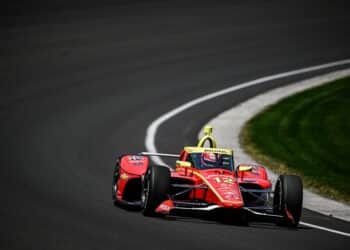

FlurrySports provides a complete guide to the 2026 Indy 500, including track details, the unique qualifying format and top driver storylines to watch.
Add us as a preferred source on Google searches!

The month of May means many different things. Spring is in full force, flowers are blooming and the days are getting longer. All of that pales in comparison to the fact that May also means the annual running of the “greatest spectacle in racing”. May is Indy, and Indy is home to the prestigious Indianapolis 500.
Motorsports enthusiasts know full well that there is truly no other race like the Indy 500. This year’s edition marks the 110th running of a race that was first contested in 1911. Some 400,000 people will be in attendance to witness the latest chapter of this Memorial Day Weekend tradition.
Welcome to your guide to everything you need to know for the 2026 Indy 500. Let’s dive into the track, the unique qualifying format, and why this is a race you simply have to watch on the weekend after the NASCAR All-Star Race.
Indy 500 NTT IndyCar Series Race Info and How to Watch
110th Indianapolis 500
Date: Sunday, May 24, 2026
Track: Indianapolis Motor Speedway — Speedway, IN
Start Time: 12:45 p.m. ET
Coverage: FOX
Distance: 500 miles (200 laps)
Pole Sitter: TBD
Defending Champion: Alex Palou
Guide to the 2026 Indianapolis 500: What to Know Before Race Day
The Track
Indianapolis Motor Speedway is one of the most iconic venues in all of sports, let alone motorsports. The track stretches 2.5 miles in length and features four distinct corners connected by two long straightaways. What makes IMS unique compared to most ovals is the sheer size of the facility — the infield alone is large enough to fit several major sports stadiums.
From a racing standpoint, the corners at Indianapolis are flat and wide, which places a massive premium on aerodynamic setup and tire management over the course of a 500-mile race. Fuel conservation is also a big component of race day strategy. Prior years have proven that there is more than one way to skin a cat when it comes to the optimal strategy to complete the full race distance.
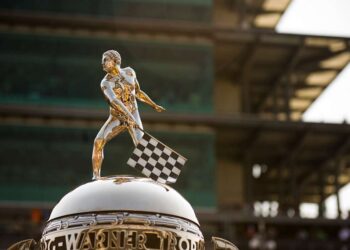
Today, the racing surface is asphalt, though a strip of the original brick still remains at the start/finish line — the origin of the track’s famous “Brickyard” nickname. It never ceases to amaze me that original editions of the Indy 500 saw cars race on an entirely brick surface! Winners traditionally kiss the bricks after taking the checkered flag.
While it took nearly seven hours for the winner to cross the line in the first-ever Indianapolis 500, car engineering has advanced quite a bit since then. Today, speeds at Indy regularly exceed 230 mph in qualifying trim, making it one of the fastest tracks in the world.
Qualifying Format
Qualifying for the Indianapolis 500 is a two-day affair unlike anything else in motorsports. Every driver on the entry list gets their shot, but where things get interesting is in the layers of drama that unfold over the course of the weekend.
On Day One, all drivers make qualifying runs and can continue to take additional attempts until the session concludes. At that point, positions 16 through 33 are locked into their starting grid spots. The nine fastest drivers from Day One are automatically locked into Sunday’s Top 12 round, giving them a chance to compete for the pole.
The drivers finishing 10th through 15th on Day One advance to a Sunday session called the Final 15, where each driver gets one attempt to post a four-lap average. The three fastest from that group join the Top 12 round.
From there, the top six drivers advance to the Firestone Fast Six — the pole shootout. One more four-lap run determines who earns the most coveted starting position in IndyCar racing.
Grid Position Significance
Starting position matters a whole lot more in IndyCar than at several NASCAR tracks. The vast majority of Indy 500 winners throughout history have started the race on the first two rows. The pole position has produced 21 race winners while the second and third spots on the grid have combined for 25 wins.
It is worth noting that for the first time since 2022, there is no bump day this year, as only 33 drivers have entered the event. When more than 33 drivers enter, a dramatic shootout is held to determine which slowest driver fails to make the race — one of the most nerve-wracking moments in all of motorsports when it does occur.
As for the field being strictly 33 cars, that is another staple tradition of the Indianapolis 500. The same can be said of the starting grid formation. The Indy 500 sees cars line up in rows of three as opposed to the traditional two-wide formation. The eleven rows of three-wide cars is one of the most iconic visuals in motorsports.
The Driver Field
The 33-car field for this year’s race features a compelling mix of seasoned veterans, reigning champions and young talent on the rise. For the drivers competing for the season-long IndyCar Series championship, this race is especially important as it pays double points.
Defending Indianapolis 500 race winner and series champion Alex Palou can only be considered among the favorites again this year. He is the championship points leader entering this year’s race. Palou is a technical savant as a driver and that precision has made him one of the best in the series over the last several years.
The next three drivers behind Palou in the 2026 IndyCar standings will all be vying for their first-ever Indianapolis 500 win. Perhaps this will be the year that one of Kyle Kirkwood, David Malukas or Christian Lundgaard etches their name into Indy lore. The double points payout would certainly bolster their championship hopes.
A name that needs no introduction to Indy 500 fans is Josef Newgarden, who won the “greatest spectacle in racing” in both 2023 and 2024. If he can score his third victory in the last four editions of the race, he will cement himself as one of the greatest Indy drivers in the modern era. Newgarden’s prowess at oval tracks outside of IMS continued earlier this year with a win at Phoenix.
Other Notable Driver Storylines
As always, the field of drivers set to run in the 2026 Indianapolis 500 extends beyond the weekly IndyCar Series regulars. One of the top storylines from that contingent is Helio Castroneves continuing his bid for an unprecedented fifth Indy 500 victory. His victory in 2021 enabled him to join A.J. Foyt, Al Unser Sr., and Rick Mears as the drivers who have won the event on four occasions.
Takuma Sato will be vying for his third Indianapolis 500 victory while other past winners in this year’s field include Alexander Rossi, Scott Dixon and Ryan Hunter-Reay.
As if that wasn’t enough, it was announced earlier this week that Katherine Legge will attempt to become the first female driver to complete “The Double”. After the Indy 500 concludes, she will catch a flight to Charlotte and run in NASCAR’s Coca-Cola 600. For those doing math at home, that’s 1,100 miles of racing in a single day if all goes according to plan. That said, just ask Kyle Larson about how difficult a feat this is to accomplish!
Why You Should Watch the 2026 Indianapolis 500
The Indianapolis 500 does not require any prior knowledge of IndyCar to enjoy. It is the kind of sporting event that transcends its own sport — like the Super Bowl, the Masters, or the Kentucky Derby. You can tune in, having never watched a single IndyCar race, and still find yourself on the edge of your seat by lap 150.
The combination of 33 cars, 500 miles, 230 mph speeds and decades of history creates a race day atmosphere unlike anything else in motorsports. Strategy, pit stops, weather, mechanical failures and sheer driver skill all play a role in determining the winner. No two editions of this race are alike.
Simply put — if you only watch one motorsports event this year, make it this one.