
FlurrySports has three takeaways from the NASCAR race today — Goodyear 400 at Darlington Raceway.
The NASCAR Cup Series delivered another demanding and unpredictable race at Darlington Raceway on Sunday, where tire management, strategy and discipline once again took center stage. The Goodyear 400 featured a mix of dominant performances, hard-luck moments and a few surprises that helped shape the outcome at the “Track Too Tough to Tame.”

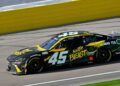
From Tyler Reddick’s long-awaited breakthrough to a strong showing from RFK Racing and an encouraging debut for NASCAR’s updated short-track package, here are three key takeaways from the Goodyear 400.
Takeaways From Goodyear 400: Who Won the NASCAR Race Today?
Tyler Reddick Scores Long-Overdue Darlington Win
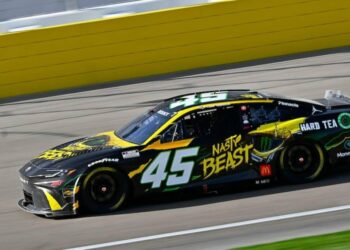
Tyler Reddick may have started from the pole after topping qualifying, but his path to victory in the Goodyear 400 was anything but smooth. Shortly after taking the green flag, he reported low battery voltage, raising questions about whether his car would even make it to the finish. He then lost the lead during green-flag pit stops in Stage 1 due to a jack issue on pit road.
The No. 45 team made a bold call at the end of Stage 1, coming in before pit road opened to swap in a larger battery. The penalty sent Reddick to the tail end of the lead lap, but with only 20 cars still on the lead lap, the move limited the damage and kept him in contention.
Even then, issues persisted, forcing him to run without a functioning cooling suit as the team worked to manage power load. Despite that, the car continued to show impressive speed as he rallied to finish fifth in Stage 2.
In the end, it was strategy and speed that sealed the win. Crew chief Billy Scott stuck to a plan of splitting green-flag runs, giving Reddick a crucial tire advantage late in the race. That advantage was evident in the closing laps, as Reddick drove past Brad Keselowski and pulled away to win by more than five seconds.
The victory was long overdue. Reddick had come close multiple times at Darlington, including three runner-up finishes and a near win in this race two years ago. Now, with four wins in the first six races of 2026 and a massive points lead, he has firmly established himself as the driver to beat.
Darlington Not Too Tough for RFK Racing
RFK Racing came into the weekend with high expectations based on both its Darlington track history and recent performance at Las Vegas, and the organization largely delivered.
Brad Keselowski led a race-high 142 laps and finished second, while Chris Buescher and Ryan Preece added solid results to round out a strong team showing. At one point in Stage 2, RFK cars were running 1-2-3 at the front of the field.
Both Keselowski and Buescher had legitimate shots to win. While Keselowski ultimately came up just short, Buescher’s day unraveled during a chaotic final pit sequence. Crew chief Scott Graves made a late call for Buescher to pit as he was already on the backstretch, forcing a sudden move toward pit road with little time to react.
With no clear communication on track or atop the spotters’ stand, a hard-charging Tyler Reddick made contact with the rear of Buescher’s car as he slowed for pit entry. The contact sent Buescher into the outside wall and forced him to complete another lap before pitting, effectively ending his chances to contend for the win.
Despite the chaos of the incident, the fact that Buescher still managed to finish inside the top 10 is yet another testament to the speed RFK showed throughout the race.
Despite not closing the deal, RFK’s overall speed and consistency reinforced its strength at Darlington. Combined with their performance last week, this group looks poised to remain a factor moving forward — especially with another short track up next.
Successful Debut of NASCAR’s Adjusted Short-Track Package
NASCAR’s updated horsepower and downforce package made its Darlington debut in the Goodyear 400 and delivered a strong showing, with several Cup Series drivers speaking positively about the changes after the race.
This marked the first time in the Next Gen era that NASCAR has run a 750-horsepower engine at Darlington. While that package has been used at traditional short tracks, Darlington’s 1.366-mile layout puts it in a unique category — not quite a short track, but not a true intermediate either.
Additional adjustments included a 3-inch spoiler, fewer stabilizing stakes in the rear diffuser, and a new right-side tire combination that had not previously been used at Darlington.
With so many variables in play, there was plenty of anticipation entering the weekend. In the end, the results spoke for themselves. Reduced downforce and meaningful tire falloff created difficult-to-handle cars and rewarded drivers who could manage their equipment over long runs.
Overall, this was a strong showing for a Gen-7 car that has struggled to deliver from an entertainment standpoint at short tracks since its inception. If this performance carries over to other tracks where this package is used, NASCAR may have finally found a formula that produces both competitive racing and meaningful driver input.