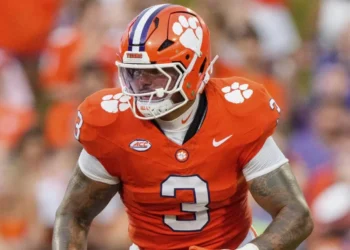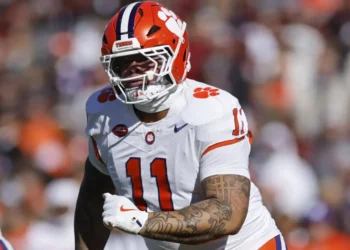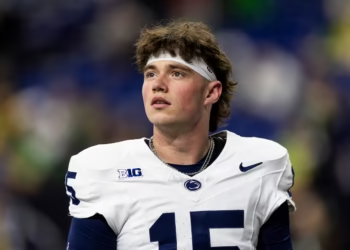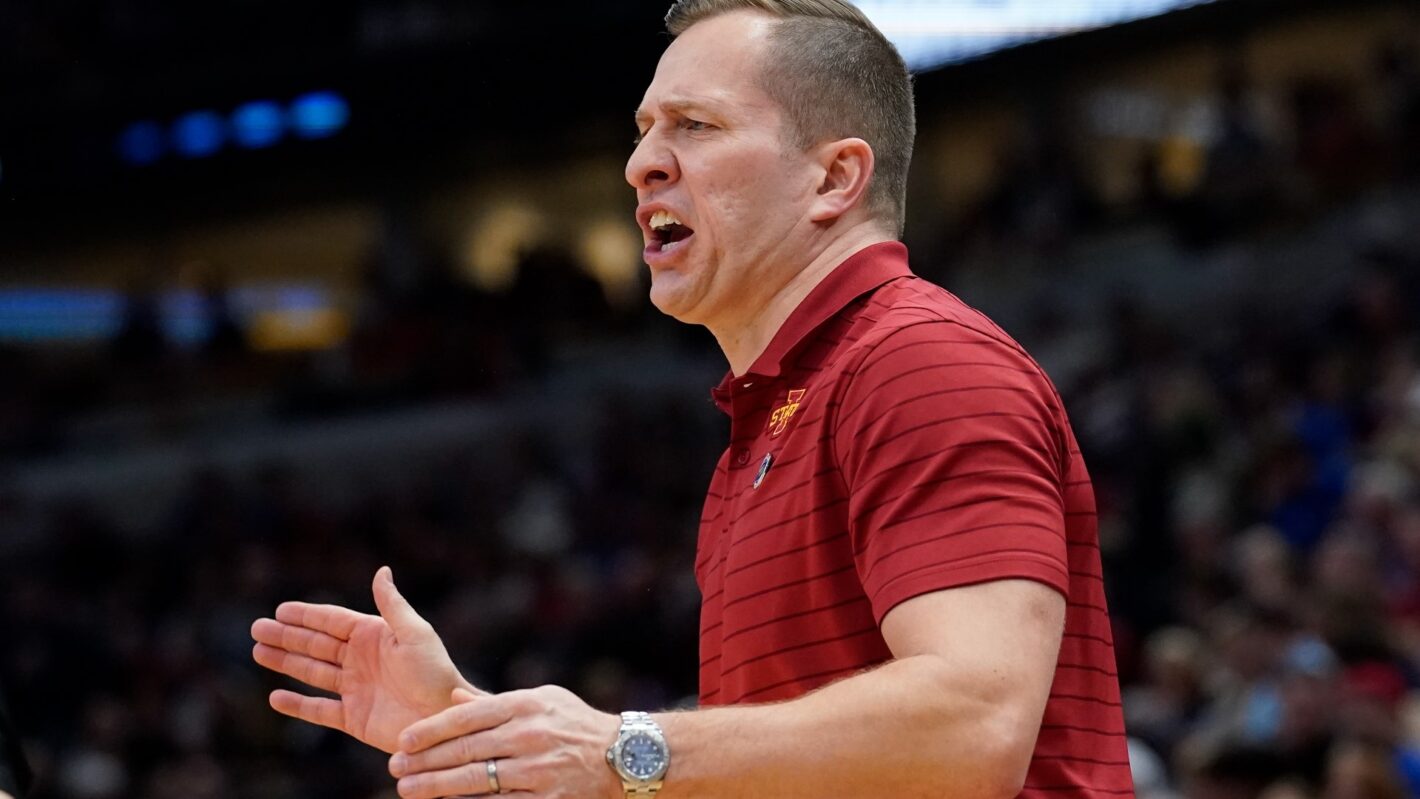

The college sports betting landscape could change forever, due to the Big Ten calling for the ban of NCAA prop bets.
Since sports betting was legalized, it has exploded like a nuclear bomb. It has made its way into every corner of sports, with betting ads in commercial breaks, in arenas, and even on courts and playing surfaces are now commonplace. Unfortunately, one of the negatives that comes with the explosion of betting is the explosion of prop bets in college sports. This has led to plenty of players receiving hateful messages and even threats. It has gotten to a point where the athletes themselves are petitioning the Big Ten to get rid of them altogether, which could set forth a chain reaction that would change the college sports betting landscape forever.
College Sports Betting Could Change, NCAA Petitioned to Ban Player Props
Big Ten Athletes Call for Change
It seems the Big Ten athletes are fed up with the way they have been treated online when fans lose their NCAA prop bets. It has gotten so bad that the Big Ten Student-Athlete Issues Commission (SAIC) wrote a letter to NCAA president Charlie Baker. The letter was a call for Baker to do something about college sports betting props and to try to persuade him to push to limit or ban all prop bets on individual student athletes. It’s no secret that the hateful messages athletes have gotten since betting has exploded have gone up drastically. Unfortunately, that has carried over to amateur collegiate athletes as well. While these types of messages and treatment of athletes are reprehensible at any level, it’s even more disgusting when it’s directed at college students.
Unfortunately, it’s not just a small minority of athletes who receive hateful messages or those that threaten harm. According to the NCAA’s own study in 2025, 51% of men’s basketball athletes have received some type of social media abuse based on game performances. There were 46% of men’s basketball players who also received abuse or threatening messages regarding NCAA prop bets placed on said players as well. While it would be foolish to believe that banning player props on individual NCAA athletes would completely eradicate abuse of these players, it would go a long way to curb such behavior. Any abuse is too much, and when more than half of the players have been victim to it, something clearly needs to be done.
What This Could Mean for College Sports Betting
Sadly, there is a very good chance that Charlie Baker and the NCAA will do absolutely nothing with this call to action. Hell, they had over a decade to figure out NIL, decided to let the courts handle it for them, and now, within a few years, we have NBA rejects *cough* Charles Bediako *cough* coming back to play NCAA basketball. It’s absolutely outrageous and reprehensible, and the NCAA should be ashamed of itself. But let’s, for a moment, give them the benefit of the doubt and say they actually do something in the best interest of their athletes. Such a push to limit or ban prop bets on individual athletes would change the college sports betting landscape forever.
Such a move would not only make a strong statement against harassment of their athletes, but it would also be a wake-up call and a call to action for other sports leagues or committees to look into the same thing. It would be foolish to believe that this could be the start of the eradication of sports betting, but if the NCAA goes down this path and is even somewhat successful, it would force other leagues to answer the question as to why they don’t do the same, especially if the amount of harassment athletes receive falls. This could not only spread across college sports, but it could spread like wildfire across sports like soccer and basketball as well, with many having young athletes or phenoms that are around the same age as college athletes.
If the NCAA makes a push here and listens to its athletes, it is not a stretch to say that all prop bets for athletes under a certain age, likely 21, would be banned outright. While they would sadly likely receive harassment when people lose their bets the moment they turn 21, it could at least somewhat shield them from the horrific messages grown adults feel are okay to send kids. Lastly, it would be a bold step by the NCAA and could go a long way in people finally having a real conversation about whether or not legalized sports betting has gone too far. No matter what Charlie Baker and the NCAA decide to do about the letter they have just received, one thing is for sure: the ramifications will be felt for quite some time.